Plant Modernization & Retrofit
Upgrade ageing plants across industries — automation retrofits, capacity expansion, energy and compliance upgrades — engineered around live operations with minimal downtime.
Discuss Your ProjectMore From the Plant You Already Have
Most plants do not need a greenfield rebuild — they need their existing assets to do more, run cleaner, and meet today’s standards. ATMAN modernizes and retrofits operating plants across industries, engineered around your live operations and executed in planned shutdown windows for minimal downtime.
Upgrades Across Industries
Dairy & Food Processing
Automate and expand existing dairy lines.
Beverages & Brewery
Capacity and packing upgrades.
Pharmaceutical
Compliance and validation retrofits.
Chemical & Petrochemical
Control and safety modernization.
Edible Oil & Agro
Energy and process upgrades.
Power & Manufacturing
Electrical and utility modernization.
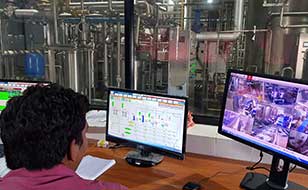
Automation & SCADA Retrofits
Bring manual or legacy plants under modern control without a full rebuild — migrating obsolete equipment and adding traceability.
- PLC / SCADA retrofits
- Migration of obsolete controls
- Recipe & batch control
- Data logging & traceability
- Remote monitoring


Capacity Expansion & Debottlenecking
Add output and remove bottlenecks within your existing footprint, with minimal civil change.
- Line debottlenecking
- Added process units & skids
- Throughput uprating
- Utility re-sizing
- Minimal civil change


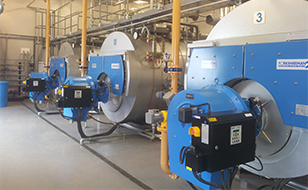
Energy-Efficiency Upgrades
Cut energy cost and carbon with heat recovery and efficient utilities.
- Heat recovery
- VFDs on motors
- Boiler & steam optimisation
- Refrigeration efficiency
- Condensate recovery


Electrical & Panel Modernization
Replace ageing electricals and panels with safe, BIS-rated, in-house-built systems.
- MCC / PCC replacement
- Wiring & protection upgrades
- APFC for power factor
- Earthing & safety
- Panel engineering, supply & commissioning


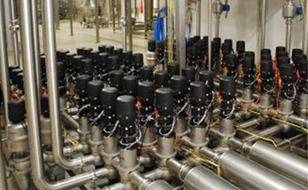
Hygiene & Compliance Upgrades
Bring older plants up to current FSSAI and 3-A norms for food safety and audits.
- CIP system upgrades
- Sanitary SS piping
- FSSAI / 3-A alignment
- Effluent (ETP) compliance
- Validation & documentation


Audits & Phased Planning
Assess the plant and stage upgrades around live operations to keep production loss to a minimum.
- Condition assessment
- Gap audits
- Phased upgrade roadmap
- Shutdown-window planning
- ROI estimation


Why Clients Choose ATMAN
Engineered Around Operations
Upgrades planned to fit your live production.
Minimal Downtime
Executed in planned shutdown windows.
One Team, All Disciplines
Process, automation, electrical and utilities together.
Measurable Gains
Efficiency, capacity and compliance you can verify.
Modernize your plant without a greenfield rebuild
Retrofit and upgrade expertise across process industries since 2008.
Request Project ConsultationPlant Modernization & Retrofit Services
Explore our industrial HVAC and utility engineering services.
AMC & After-Sales Service
Annual maintenance contracts and responsive after-sales support.
View solution →Energy Efficiency Retrofit
Cut steam, power and refrigeration costs in existing plants.
View solution →Who Actually Handles an Expansion or Retrofit of a Running Plant?
It is a fair question, and the honest answer is that most suppliers handle part of it. An equipment manufacturer sells you the machine. A panel builder wires it. An automation firm writes the logic. A civil contractor makes the foundation fit. Each is competent inside their scope, and the gaps between them become your project to manage — usually while you are also trying to run the plant.
A retrofit needs one party who owns the interfaces: where new equipment meets old process, where new controls meet existing logic, where added load meets available power, where the tie-in happens and what stops while it does. ATMAN takes that role — process engineering, automation, electrical and utilities under one contract, on plants that are already running.
What Actually Triggers a Modernization
Nobody modernises because the plant is old. It is always one of four business pressures, and naming which one you have determines the whole scope:
| Driver | What it sounds like internally | What the project usually becomes |
|---|---|---|
| Capacity | “We are turning away orders” or “we cannot handle the flush season” | Debottlenecking first, new equipment only where the constraint genuinely is |
| Product range | “The customer wants a variant we cannot make” | Process changes, recipe control, sometimes a new line section |
| Cost and efficiency | “Energy and wastage are eating the margin” | Utilities, heat recovery, CIP re-use, measurement so savings are provable |
| Compliance and customers | “The audit flagged it” or “our buyer now requires records” | Hygiene upgrades, traceability, automated record-keeping |
| Obsolescence | “We cannot get spares any more” | Control system migration — see Siemens PLC migration |
Most plants have two or three of these at once. Bundling them into one shutdown is usually far cheaper than three separate projects, and this is where a proper audit pays for itself several times over.
Brownfield Is a Different Discipline From Greenfield
This is the point most quotations miss, and the reason retrofits overrun. Building new is an engineering problem with a blank sheet. Modernising a running plant is an engineering problem constrained by everything already there — and by the fact that production cannot simply stop while you think.
- The drawings do not match the plant. Twenty years of undocumented modifications sit between the as-built file and reality. Every retrofit begins by finding out what is actually installed
- Space is already occupied. The obvious place for the new equipment has a pipe rack in it
- Utilities are already committed. Steam, chilled water, compressed air and power are sized for what exists — added load has to come from somewhere
- Interfaces to old equipment that may have no documentation, no spares and no vendor still trading
- The plant must keep running through most of the work, which dictates sequencing more than engineering preference does
- The people are already busy. Your maintenance team cannot support a project full-time and run the plant
The Survey Comes First, and It Is Not a Formality
- Physical survey — what is actually installed, its condition, and what has been modified since the drawings were made
- Utility load audit — steam, refrigeration, compressed air, power. Actual consumption against installed capacity, because the headroom you think you have is often already spent
- Process capacity study — measured throughput at each stage, to find the real constraint rather than the assumed one
- Control system assessment — what the existing logic does, what is documented, what is obsolete
- Compliance gap review against FSSAI or your customers’ audit standards
- Updated as-built drawings — the deliverable that makes every future project cheaper
The survey routinely changes the project. The equipment the plant was going to buy is frequently not the constraint, and the money is better spent elsewhere.
Debottlenecking Before Capex
The most profitable modernization is often the one where you buy nothing. A line runs at the speed of its slowest stage; every other stage has spare capacity you already paid for.
- Measure each stage under real conditions, not from nameplate ratings
- Find the actual constraint — frequently a transfer pump, a heat exchanger approach temperature, a CIP window blocking the next batch, or a changeover procedure rather than a machine at all
- Test whether the constraint moves cheaply — control changes, sequencing, an intermediate buffer tank
- Only then price equipment, and only for the stage that is genuinely limiting
It is common to recover a meaningful percentage of capacity with control and sequencing changes alone. It is equally common for a plant to have bought a bigger machine for a stage that was never the bottleneck — the constraint simply moved one step downstream and the money produced nothing.
Sequencing Around Production
On a running plant, the shutdown window is the real currency. The engineering is usually the easy part; fitting it into the hours you can afford to stop is what makes retrofit work specialised.
- Maximum pre-fabrication — skids, panels and pipe spools built and tested off site, so the outage carries only tie-in work
- Tie-in points designed in advance, with isolation planned and valves fitted during earlier windows
- Phased by area so no single outage carries the whole risk
- Aligned to shutdowns you already take — annual maintenance, lean season, a scheduled cleaning window
- Factory-tested before it arrives, so commissioning is verification and not discovery
- A written rollback position for every tie-in — what happens if it does not go back together on time
Where Retrofit Budgets Actually Go Wrong
Brownfield costs hide in places greenfield costs do not. These are the ones that most often turn up as variations after the order:
| Hidden cost | Why it is missed | How it is avoided |
|---|---|---|
| Utility upgrades | New equipment needs steam, chilled water or power the plant does not have spare | Utility load audit before, not after, equipment selection |
| Making old and new talk | Interfaces to undocumented legacy equipment | Control system assessment during survey |
| Civil and structural | Foundations, floor loading, access, drainage | Physical survey with the actual equipment footprint |
| Extended outage | Tie-ins take longer because reality differs from drawings | Pre-fabrication and verified as-builts |
| Rework from bad drawings | Fabricated items do not fit what is installed | Survey and update as-builts first |
| Compliance triggered by the change | Modifying one area brings it under a current standard | Compliance gap review at the start |
Every one of these is found by a proper survey. That is the argument for paying for a survey rather than accepting a free quotation — the free quotation contains all of these as future variations.
What We Modernise
| Area | Typical scope |
|---|---|
| Process equipment | Pasteurisers, homogenisers, separators, tanks, heat exchangers, transfer systems |
| Controls and SCADA | PLC migration, supervision, recipe and batch control, records — see SCADA integration |
| Electrical | Panels, distribution, load balancing, safety and earthing brought to current standards |
| Utilities | Steam, refrigeration, compressed air, chilled water — capacity, efficiency and heat recovery |
| Hygiene and compliance | CIP coverage and automation, material and personnel flow, surfaces, drainage |
| Measurement | The instrumentation needed to prove the savings the project promised |
Proving the Result
A modernization that cannot be measured is an opinion. Baselines are recorded before the work so improvement is demonstrable afterwards — to your board, your bank, or whoever approved the spend.
- Throughput per hour and per shift, before and after
- Energy per unit produced, not total energy, which moves with volume
- Yield and wastage
- Changeover and CIP time — often the largest recoverable block of the day
- Unplanned downtime
- Compliance findings closed
Where instrumentation to measure these does not exist, adding it is part of the scope. See plant monitoring and dashboards.
Common Questions
Can you modernise a plant we did not build?
Yes — that is most of this work. It starts with a survey, because the drawings will not match what is installed. We reconstruct the as-built position first and hand the updated drawings over as a deliverable.
How much production will we lose?
That is a design parameter, not an outcome. Pre-fabrication, phased tie-ins and alignment with shutdowns you already take are all aimed at compressing it. We quote the outage hours explicitly rather than leaving them to emerge.
Do we have to stop the whole plant?
Usually not. Most retrofits are phased by area so the rest of the plant keeps running. Whether that is possible depends on your process and on where the tie-ins fall — the survey answers it.
Is it cheaper than building new?
Almost always, when the existing plant is fundamentally sound — you are reusing building, utilities, services and much of the equipment. Where the process itself has been outgrown, a new line can be the better answer, and we will say so.
Can you handle civil and structural work too?
Foundations, access and structural changes are coordinated within the same contract. The point of a single contract is that the interfaces are ours to manage, not yours.
Will you work with our existing equipment vendors?
Yes, and often we have to. Where an OEM must be involved we manage that interface rather than handing you two suppliers pointing at each other.
How long does a typical retrofit take?
It varies with scope, but the sequence is consistent: survey and design, then procurement and pre-fabrication, then a short intensive tie-in window, then commissioning. Most of the elapsed time happens while your plant is running normally.
Do you serve plants outside Gujarat?
Yes. We execute across India, and retrofit work in particular is planned around your shutdown calendar rather than our travel.
Discuss Your Plant Retrofit
Tell us the age and make of your existing plant and where the bottlenecks are. Our engineers will come back with a retrofit scope that upgrades control, instrumentation and electricals without a greenfield rebuild.